Grupo Siroco
Your Boat Expert
Choose from our exclusive brands: Lagoon, Jeanneau, and Excess.
Browse through the thousands of boating products we have for you.
A professional technical team dedicated to ensuring that you always sail safely.
Sign up for our exclusive events and stay up to date on the latest news in the boating world.
Choose from our exclusive brands: Lagoon, Jeanneau, and Excess.
Browse through the thousands of boating products we have for you.
A professional technical team dedicated to ensuring that you always sail safely.
Sign up for our exclusive events and stay up to date on the latest news in the boating world.
Tips
How does it work, and when is it worth it?
Grupo Siroco
Your Boat Expert
When we’re at a marina, drinking water seems like a virtually unlimited resource. We turn on a faucet, fill our tanks, and continue our journey.
But after a few days at sea, water becomes one of the things we think about most.
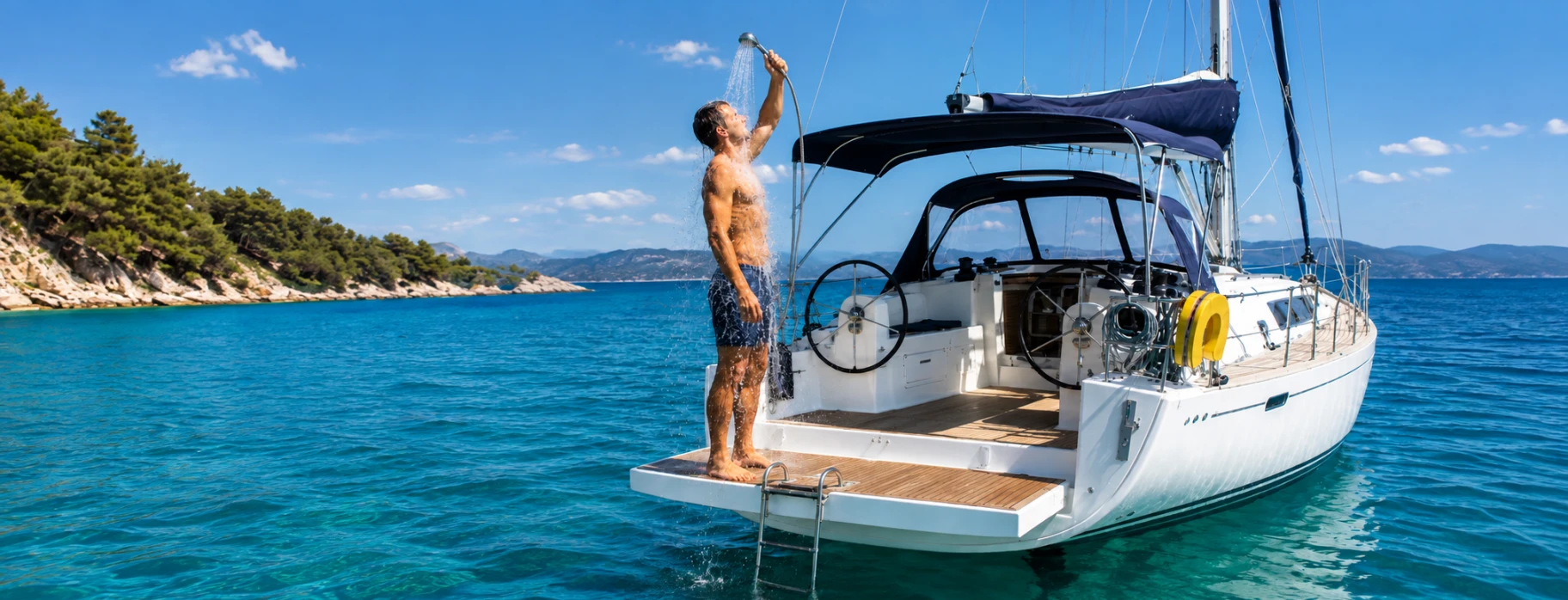
Drinking, cooking, washing dishes, showering, or simply washing our hands all add up to a considerable daily consumption. For those on extended cruises, a desalinator can completely transform a boat’s range.
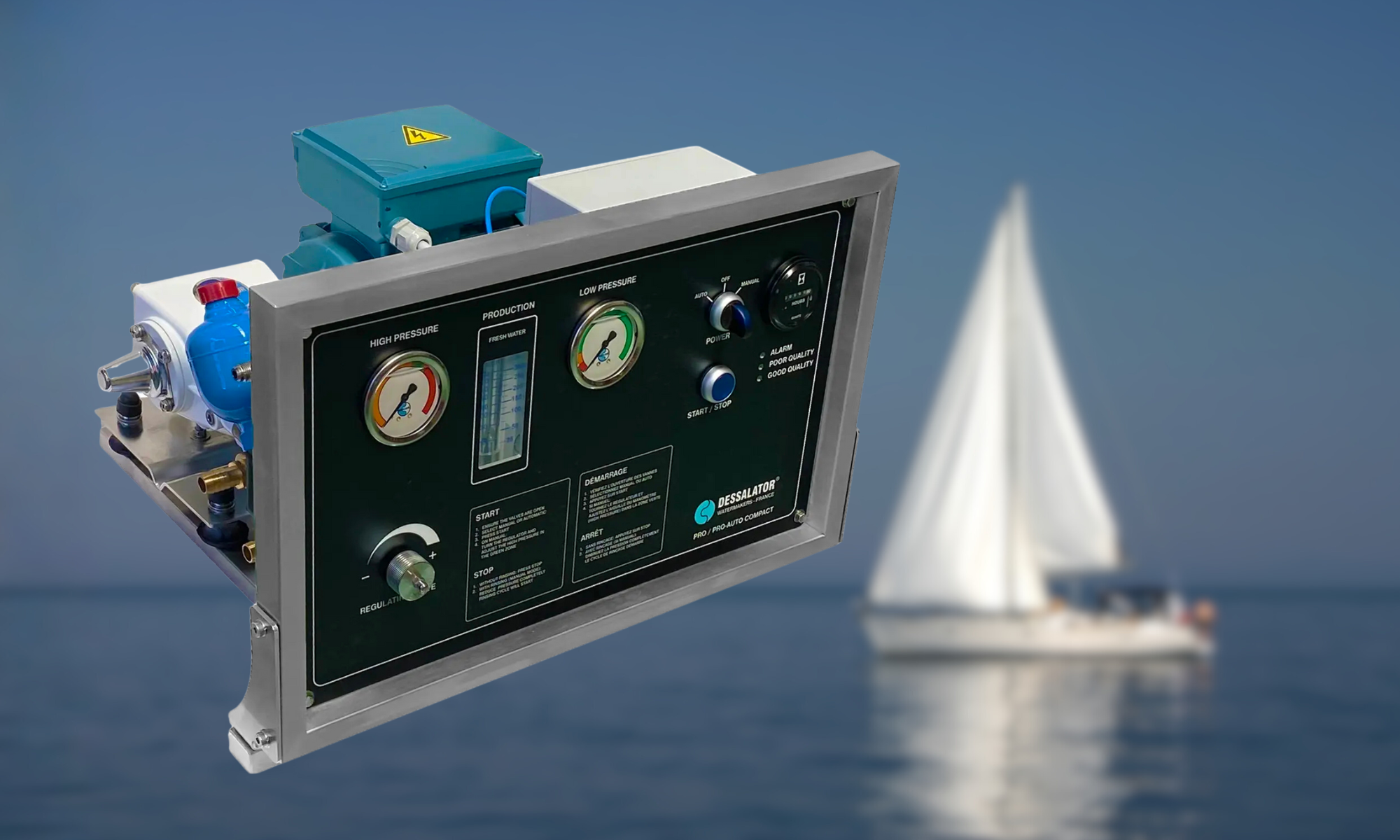
A desalination unit, also known as a watermaker, is a device that converts seawater into fresh water.
The principle is usually based on reverse osmosis. Seawater is forced through very thin membranes that allow water to pass through but retain most of the salts and other impurities.
The result is fresh water that can be routed to the vessel’s storage tanks.
The process requires energy and maintenance, but it allows for the production of water on board rather than relying exclusively on existing tanks.
For those spending just a few days on a boat, this can be a convenience. For those on extended cruises, it can make a huge difference in terms of range.
Before deciding to install a watermaker, it’s worth assessing the crew’s water consumption.
A person uses water for drinking, cooking, personal hygiene, and cleaning. Water consumption varies greatly depending on habits and the type of vessel.
A crew that takes long showers and uses water without major restrictions will have very different needs from one that carefully monitors every liter.
The capacity of the tanks is also important.
A boat with large tanks can go many days without producing water. A smaller one, on the other hand, can benefit greatly from a freshwater production system.
Therefore, the question is not just “how many liters does the desalinator produce?”, but rather how much we consume and how long we want to go without refilling.
A desalination system does not produce water for free. It requires energy to operate and needs regular maintenance.
Filters, membranes, and other components must be monitored in accordance with the manufacturer’s recommendations. Proper use and maintenance are important to ensure the system’s performance and extend its service life.
The energy available on board must also be taken into account.
On a boat equipped with solar panels and sufficient storage capacity, water production can be integrated into daily energy management. In other setups, it may be necessary to use the engine or another power source.
Once again, it is a matter of balancing available water, available energy, and consumption.
There is no one-size-fits-all answer for all boats.
For those who spend weekends at the marina or take short coastal trips, the existing tanks may be more than enough.
For those who go on cruises lasting several weeks, spend long periods at anchor, or plan to sail to destinations where water supply isn’t always easy to come by, a watermaker can be a very useful tool.
The big advantage isn’t just in producing water. It’s in the freedom it provides.
Less worry about tank capacity means more time to explore a cove, stay at a destination we like, or simply keep sailing without immediately having to look for the next marina.
At sea, autonomy means freedom. And when it comes to autonomy, water is just as important as fuel and power.
Subscribe to our newsletter
Tips
Tips
Tips
Tips
Tips
Tips