Grupo Siroco
Your Boat Expert
Choose from our exclusive brands: Lagoon, Jeanneau, and Excess.
Browse through the thousands of boating products we have for you.
A professional technical team dedicated to ensuring that you always sail safely.
Sign up for our exclusive events and stay up to date on the latest news in the boating world.
Choose from our exclusive brands: Lagoon, Jeanneau, and Excess.
Browse through the thousands of boating products we have for you.
A professional technical team dedicated to ensuring that you always sail safely.
Sign up for our exclusive events and stay up to date on the latest news in the boating world.
Tips
GPS, AIS, radar, and sonar—what's the difference?
Grupo Siroco
Your Boat Expert
For those just starting to explore marine electronics, the sheer number of devices available can be surprising. GPS, chartplotter, AIS, radar, sonar, autopilot, VHF… each system has a different function, but they all work together to make navigation simpler and safer.
The key is to understand what each piece of equipment actually does and, above all, which ones are important for the way we sail.
GPS has become an indispensable tool in modern navigation. Using satellite signals, it allows us to determine a vessel’s position with great precision.
But GPS, on its own, only tells us where we are.
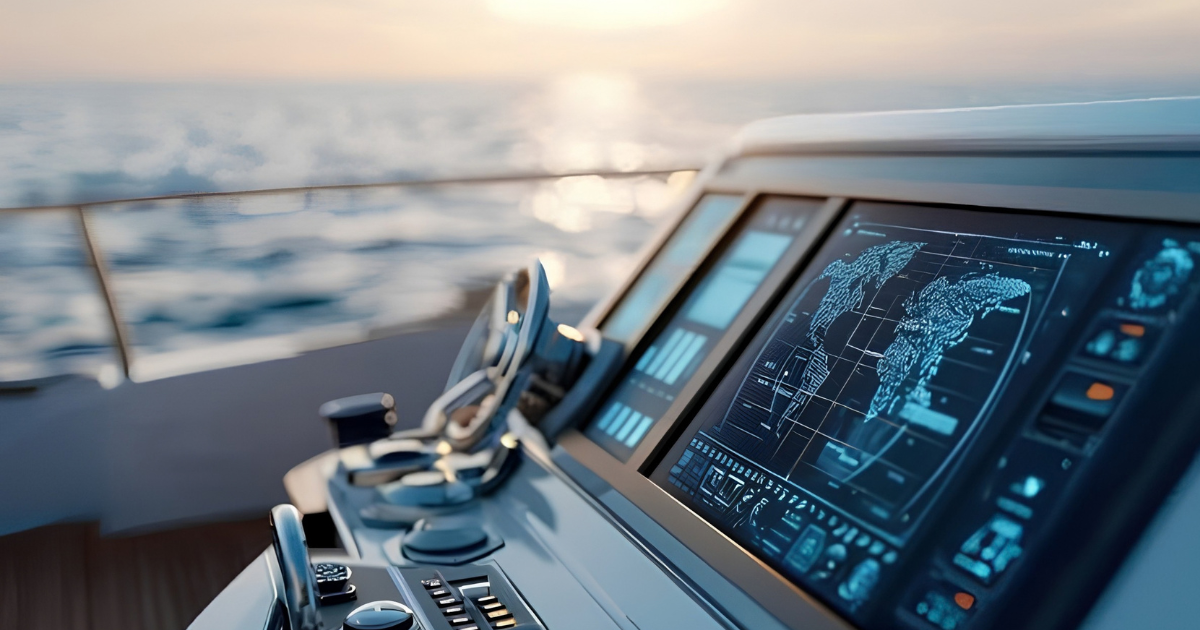
This is where the chartplotter comes in. By displaying your position on a digital nautical chart, it allows you to plan routes, track your course, and view information relevant to navigation.
On a day with good visibility, close to the coast, the combination of a chart, GPS, and local knowledge may seem sufficient. But as we move further from the coast or navigate in less favorable conditions, other equipment begins to take on greater importance.
The AIS—Automatic Identification System—adds another dimension to the information available in the cockpit.
Depending on the equipment and the vessel, it allows you to receive information about other ships equipped with AIS, such as their identification, position, course, and speed.
It is particularly useful in areas with heavy maritime traffic, during nighttime navigation, or in conditions of reduced visibility.
One of the major advantages of AIS is that it turns a distant vessel into an identified target on the screen. Instead of seeing just a dot, we can obtain additional information that helps us understand what is happening around us.
Of course, AIS does not replace visual observation, radar, or the crew’s vigilance. It is simply another source of information to help build a complete picture of the situation.
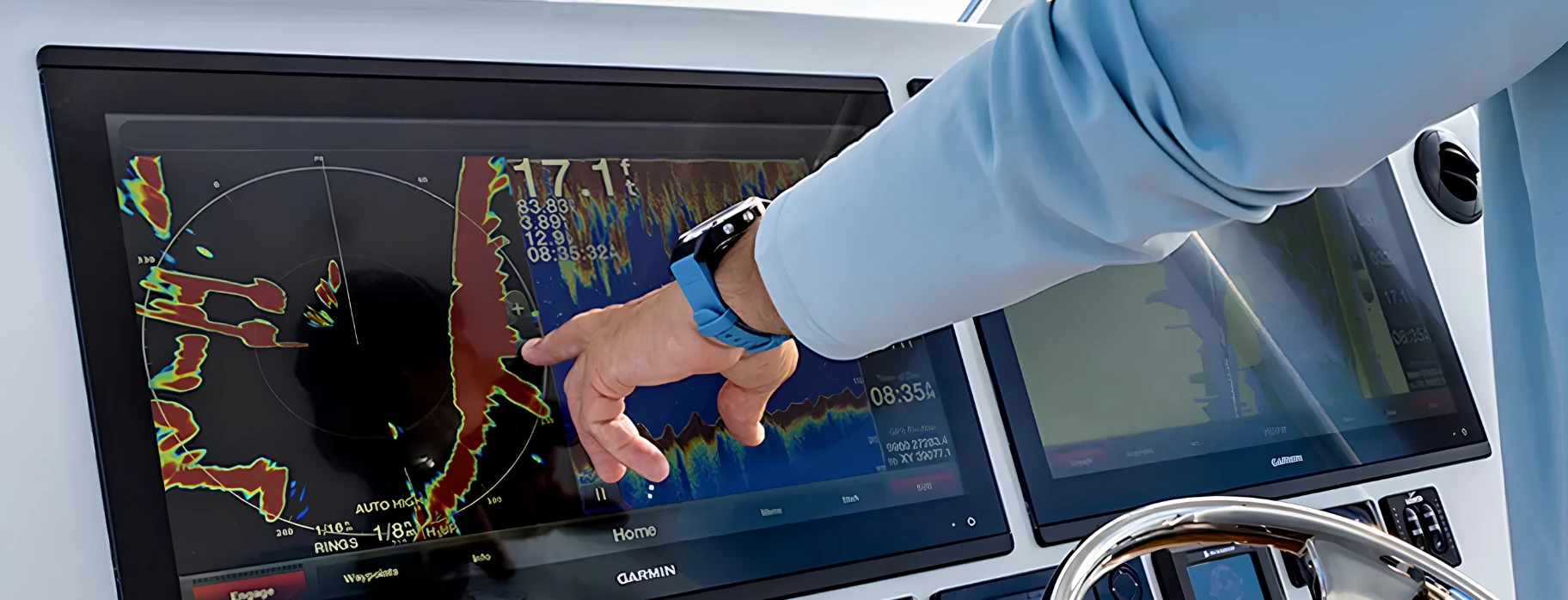
Radar works differently. It emits radio waves and interprets the signals reflected by objects, allowing it to identify targets even when visibility is limited.
Fog, heavy rain, or night navigation are situations in which radar can be especially useful.
Sonar, on the other hand, looks downward rather than toward the horizon. It allows you to determine water depth and gather information about the seabed.
For those who sail close to the coast, fish, or frequent unfamiliar areas, the depth sounder can be a very important tool.
These are, therefore, devices with completely different functions:
• GPS: determines our position.
• Chartplotter: displays our position and helps with navigation.
• AIS: provides information about vessels equipped with AIS.
• Radar: allows you to detect targets around you.
• Sonar/depth sounder: provides information about depth and the seabed.
There is no single ideal marine electronics setup for all boats.
A boat used for short coastal trips will have different needs than a sailboat equipped for long crossings. Similarly, a fishing boat will have different needs than a catamaran used for family cruises.
The choice should start with how we use—and want to use—the boat.
Where do we sail? For how many hours? Do we usually sail at night? Do we make crossings? Do we sail in areas with heavy traffic? Do we spend extended periods away from marinas?
Technology should serve navigation, not the other way around.
When the various pieces of equipment are properly integrated, the information available in the cockpit can be much more comprehensive. But no screen can replace experience, observation, and the ability to read the sea.
Because, ultimately, the best onboard electronics are those that help us navigate better without making us forget to look toward the horizon.
Subscribe to our newsletter
Tips
Tips
Tips
Tips
Tips
Tips